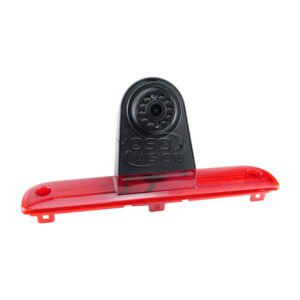
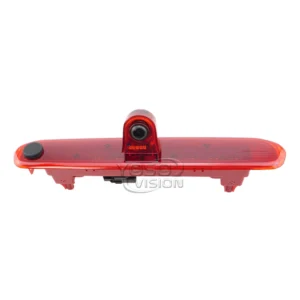
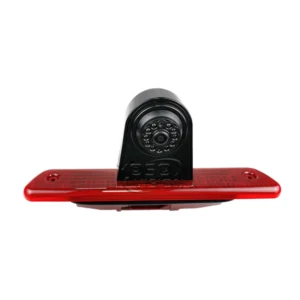
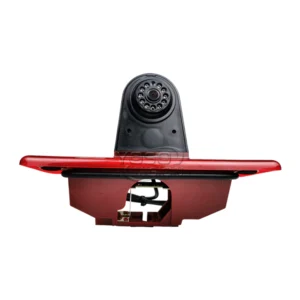
Vehicle cameras mainly include internal cameras, rear view cameras, front view cameras, side view cameras, surround view cameras, etc. The front-view camera is used most frequently, and can realize multiple functions such as lane departure warning and collision warning. The surround-view camera is assembled around the car for image stitching to obtain a panorama, and the addition of algorithms can realize the route perception function. The rear-view camera provides a rear-view parking assist function, which is mainly a reversing rear-view lens. Traditional cars have no front-mounted in-vehicle cameras or have 1-2 in-vehicle cameras. With the increase of automation, the number of cameras increases. At present, Tesla AutoPilot 2.0 uses 8 cameras. In the future, the demand for front-mounted in-vehicle cameras for autonomous vehicles will be more than 10. . Therefore, there is a huge opportunity for in-vehicle cameras.
Vehicle cameras are important sensors for autonomous vehicles, mainly including lenses, filters, CMOS, PCBA, DSP, and other packaging and protective materials. Different from the mobile phone camera, the module process of the vehicle camera is more difficult, mainly because the vehicle camera needs to maintain a stable working state for a long time under various complex working conditions such as high and low temperature, damp heat, strong low light and vibration. On the whole, the technical barriers of car cameras are significantly higher than those of mobile phone cameras. With the rise of autonomous driving, in-vehicle cameras have become the new blue ocean of the camera market.